
EMDRIA Certified · In Person & Online Across California
EMDR Therapy in Carlsbad & San Diego
EMDRIA-certified EMDR therapy for trauma, anxiety, and PTSD that helps your brain process what talk therapy alone can't reach, so you can stop surviving and start living.
Request Your Free ConsultationYou've tried talking about it. Maybe you've been in therapy before and it helped, to a point. You understand your patterns intellectually. You can explain exactly why you feel the way you do. But knowing isn't the same as healing. The anxiety is still there. The flashbacks still come. Your body still tenses when something triggers you. The nightmares haven't stopped.
That's because trauma doesn't live in the thinking part of your brain. It lives in the emotional and sensory parts, the parts that no amount of talking can fully reach. That's where EMDR comes in.
EMDR (Eye Movement Desensitization and Reprocessing) is an evidence-based therapy developed by Dr. Francine Shapiro that helps your brain reprocess traumatic memories at a neurological level. It's been extensively researched and is recommended by the World Health Organization, the American Psychological Association, and the Department of Veterans Affairs for treating trauma and PTSD.
I'm Vera McGrath, an EMDRIA-certified EMDR therapist, the highest level of EMDR certification available. This means I've completed hundreds of hours of advanced training and supervision beyond basic EMDR training. When you work with me, you're getting a specialist, not a generalist who added EMDR to their list.
My office is in Carlsbad, and I see clients in person from across North County and San Diego County: Oceanside, Encinitas, Vista, San Marcos, and beyond. I also offer online EMDR therapy to anyone in California, so you can work with an EMDR specialist whether you're in San Diego, Los Angeles, the Bay Area, or anywhere in between.
Does This Sound Familiar?
If you're experiencing any of these, you're not alone, and therapy can help.
“EMDR doesn't erase your memories. It takes the charge out of them, so you can remember without reliving.”
Vera McGrath, LMFT, EMDRIA Certified

How EMDR Works
When something traumatic happens, your brain's normal information processing system gets overwhelmed. The memory gets stored with all of its original intensity, the emotions, the physical sensations, the beliefs about yourself (“I'm not safe,” “I'm helpless,” “It's my fault”). It doesn't get filed away as a past event; instead, it stays “live” in your nervous system.
EMDR uses bilateral stimulation (typically guided eye movements, but sometimes tapping or audio tones) to activate your brain's natural healing process. While you focus on the traumatic memory and follow the bilateral stimulation, your brain begins to reprocess the memory, connecting it with more adaptive information and filing it away properly.
The result? You can still remember what happened, but it no longer carries the same emotional charge. The flashbacks stop. The nightmares fade. The triggers lose their power. You feel a genuine shift, not just a cognitive understanding, but a deep, felt sense of relief.
Most people are surprised by how quickly EMDR works. While every person is different, many of my clients notice significant improvement within 6-12 sessions.

The 8 Phases of EMDR Treatment
EMDR is a structured therapy with eight distinct phases. Here's what to expect:
Phase 1: History & Treatment Planning. We identify the memories and experiences that need to be processed and create a roadmap for your treatment.
Phase 2: Preparation. I teach you grounding and coping techniques to help you feel safe and stable before we begin processing. We never jump into trauma work before you're ready.
Phase 3: Assessment. We identify the specific memory, the negative belief attached to it, and the positive belief you'd like to hold instead.
Phases 4-7: Processing. This is where the magic happens. Using bilateral stimulation, we reprocess the targeted memory. You may notice shifts in emotions, physical sensations, and beliefs as the processing unfolds.
Phase 8: Re-evaluation. At the start of each session, we check in on previously processed memories to ensure the positive changes have held.
Ready to Heal at a Deeper Level?
EMDR can help you stop just coping and start truly healing. Schedule your free consultation to learn if EMDR is right for you.
Request Your Free ConsultationEMDR for Anxiety, Trauma & PTSD
EMDR was developed for post-traumatic stress, and it remains one of the most effective treatments for PTSD, whether the trauma was a single event like an accident, an assault, or a frightening medical experience, or years of difficult experiences layered on top of each other.
It's also remarkably effective for anxiety. Persistent worry, panic attacks, health anxiety, and hypervigilance are often rooted in earlier experiences that taught your nervous system the world isn't safe. EMDR for anxiety goes after those roots instead of just managing the symptoms, which is why so many of my clients find relief where talk therapy and coping skills alone fell short.
In my Carlsbad practice, I use EMDR to treat trauma and anxiety in adults of all kinds: mothers and expecting parents, high-achieving professionals, people healing from childhood wounds, and anyone whose past keeps showing up in their present.
EMDR for Moms: Why It's Especially Powerful
Motherhood has a way of activating old wounds. Your baby's cry might trigger memories of feeling helpless as a child. Your struggle to bond might connect to your own mother's emotional absence. Your birth trauma might layer on top of previous traumatic experiences, creating a web of pain that feels impossible to untangle.
EMDR is particularly effective for mothers because it can address multiple layers simultaneously:
- Birth trauma: Processing emergency deliveries, NICU stays, complications, or feeling unheard during labor
- Postpartum anxiety & OCD: Reducing the intensity of intrusive thoughts and constant worry
- Childhood wounds resurfacing: Healing patterns from your own upbringing so you don't pass them on
- Loss and grief: Processing miscarriage, stillbirth, or the death of the motherhood experience you expected
- Identity disruption: Healing the loss of self that often accompanies becoming a mother
- Relationship trauma: Processing relational wounds that are affecting your partnership or your parenting
You don't have to know exactly what's wrong to benefit from EMDR. Often, what you think is the problem is actually connected to something deeper, and EMDR is uniquely suited to following those connections to their source.
What EMDR Sessions Are Like
If the idea of “processing trauma” sounds scary, I get it. Let me reassure you: EMDR is not about forcing you to relive your worst moments. It's a carefully guided process where you are always in control.
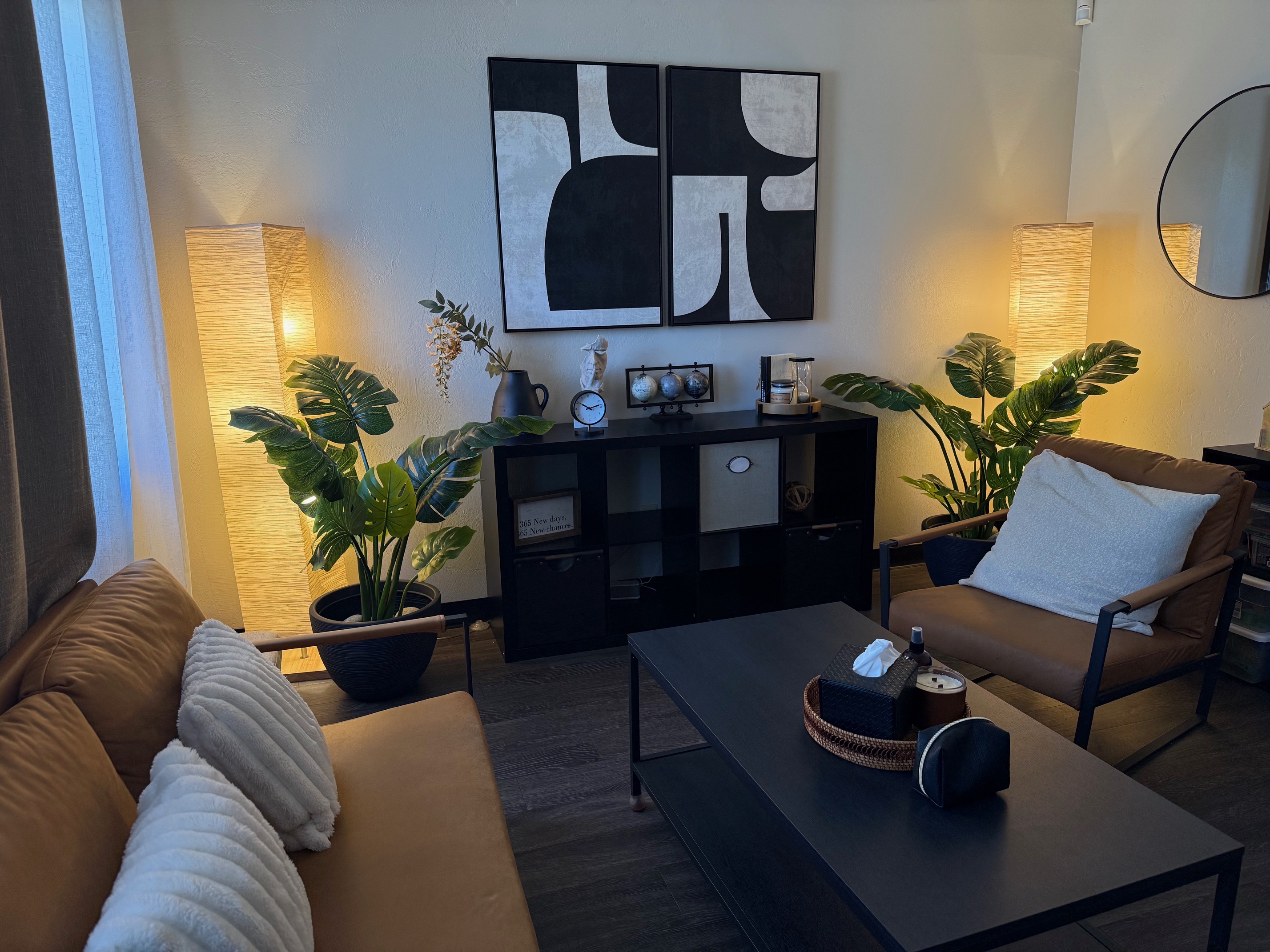
In a typical session, you'll sit comfortably in my office (or in your own home during a virtual session). I'll guide you to hold a specific memory in mind while following my hand movements or tapping. You might notice emotions, images, or body sensations shifting as we work. Some moments feel intense; others feel surprisingly gentle. Between sets of eye movements, we check in together.
Many women describe the experience as “watching the memory from a distance” rather than being trapped inside it. After a session, you might feel tired (your brain has been doing a lot of work!) but also lighter. Many clients report that the most powerful shifts happen between sessions. You'll notice yourself reacting differently to triggers, sleeping better, and feeling more present.
Virtual EMDR is just as effective as in-person and is available to all California residents. I use secure, specialized software for online EMDR sessions.
Online EMDR Therapy in California
You don't need to live near Carlsbad to work with an EMDRIA-certified EMDR therapist. I provide online EMDR therapy throughout California using secure, HIPAA-compliant video and specialized bilateral-stimulation software designed for virtual sessions.
Research shows that online EMDR is as effective as in-person treatment, and many clients prefer it, no commute, no childcare logistics, and the comfort of processing difficult material in your own space. Sessions are the same length and follow the same eight-phase protocol as in-office EMDR.
Whether you're in San Diego, Los Angeles, Orange County, the Bay Area, Sacramento, or a smaller community without an EMDR specialist nearby, we can work together. The only requirement is that you're physically located in California during our sessions.
Benefits of Therapy
Frequently Asked Questions
You Don't Have to Do This Alone
Take the first step toward healing. Schedule your free consultation today and discover how therapy can help you feel like yourself again.
Request Your Free Consultation